2024
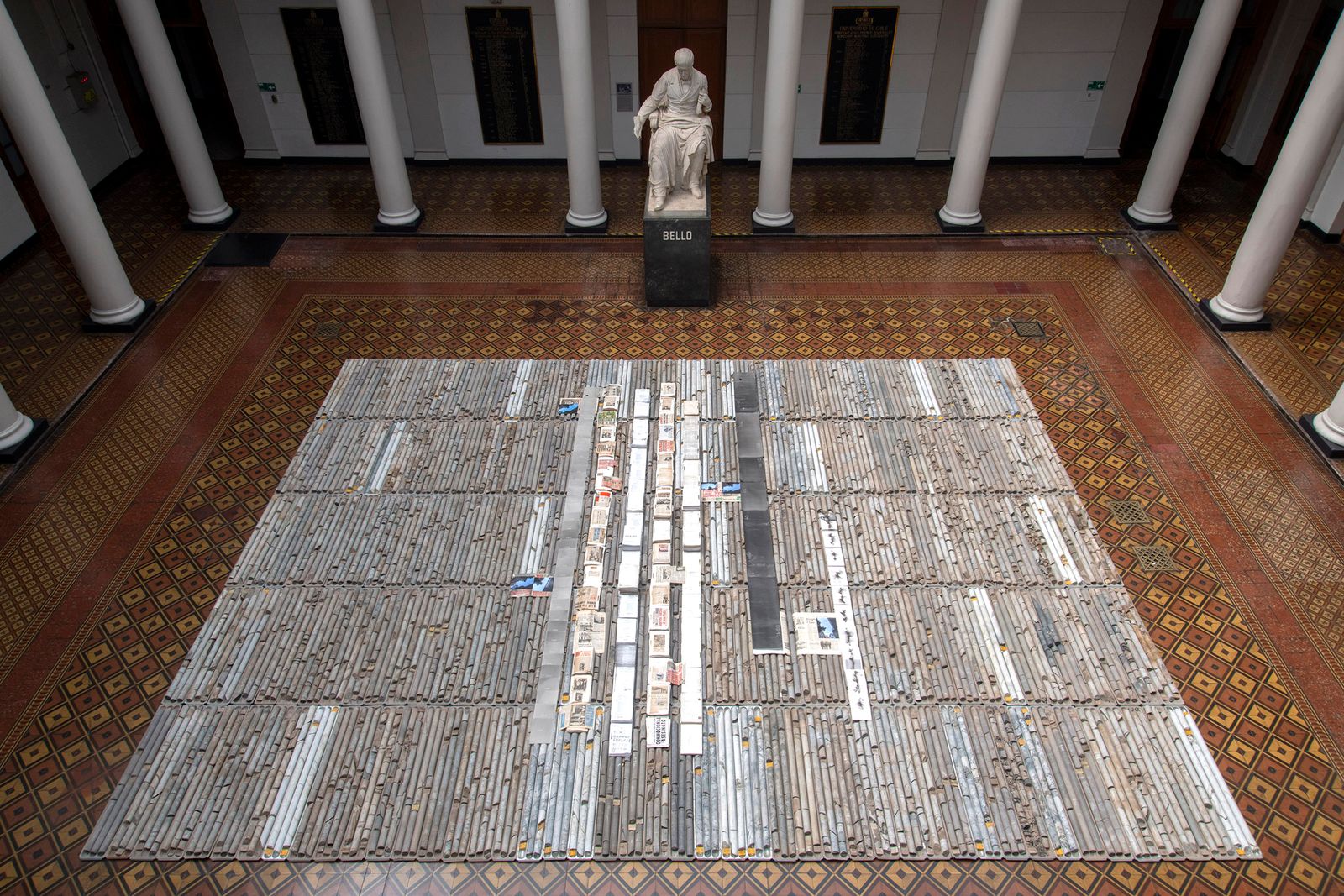
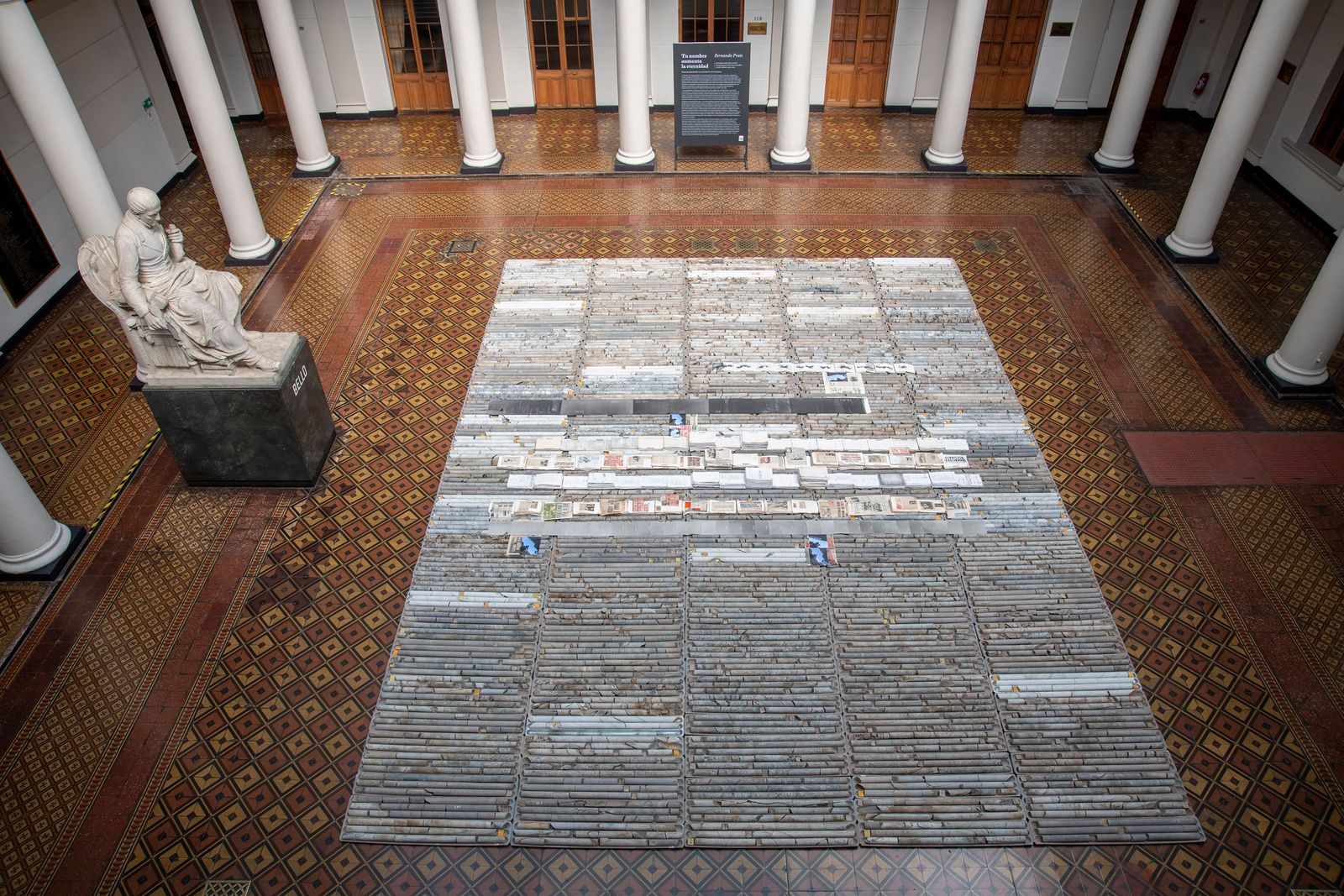
<p><strong style="color: rgb(0, 0, 0);">TIME OF RECOGNITION</strong><span style="color: rgb(0, 0, 0);"> Light and darkness</span></p><p><strong style="color: rgb(0, 0, 0);">YOUR NAME INCREASES ETERNITY</strong></p><p><span style="color: rgb(0, 0, 0);">by Elvira Hernández</span></p><p><span style="color: rgb(0, 0, 0);">Commemoration of the 50th anniversary of the murder of Carlos Prats González and Sofía Cuthbert. (1974 -2024)</span></p><p><em style="color: rgb(0, 0, 0);">Fernando Prats</em></p><p><strong style="color: rgb(0, 0, 0);">50 YEARS</strong></p><p><span style="color: rgb(0, 0, 0);">Just a few seconds ago, it has been 50 years since the military coup in Chile in September 11, 1973, our greatest tragedy of the 20th century. And a few hours ago, it has been 40 years since that bloody episode, referred to as a military pronouncement since its intrusion, that is, bloodless, leaving us with the certainty that words would no longer be able to grasp reality.</span></p><p><span style="color: rgb(0, 0, 0);">Time is our inescapable confinement. It can be sometimes dark and then light at a later time, and both circumstances will demand words from us, true words that respond to the facts. In its three-dimensional form of past, present and future, time is constantly questioning us, even when we do not want this questioning. This is what has happened in this fiftieth anniversary. We felt that we needed to move forward as a society, responding not to the consequences of a military coup –which was devastating for its cruelty and whose aftermath created the field of human rights in the country– but in a deeper way, in relation to the legitimacy of an armed action, the antidemocratic decision to break a constitutional arrangement in order to resolve the political problems of such democracy. And the answers have been mysterious and obscure.</span></p><p><span style="color: rgb(0, 0, 0);">Very few, it must be said, had a genuine concern for the commemorative day of the overthrow of President Salvador Allende, and also for the strenuous process undertaken for the recovery and rescue of democracy. They could not see the opportunity given by this painful date to heal wounds that had never been cared for and to strengthen our always nascent civic life. On the contrary, many short-term political interests were stirred up in a pulverized citizenry so that the date would be perceived as a threat; the imminence of another social breakdown, a new explosion. An immobilized day was desired, uneventful, unquestioning of our political transition moving on its path. This claim was based on the belief that fear never stops delivering results. Thus, the reflective dimension that was imperative to the commemorative ceremony was taken away from the moment when the political word had failed with the consequent irruption of military violence; the grim episode of our history that ended with so many lives. It was incomprehensible that the political responsibility of its actors in the military intervention was to be attenuated and that the cart of oblivion was pushed forward; to veil words, to push memories away towards a dissolving future, to divert the past, to stop time. It was ignoring Cronos and his unyielding march, the fickle way he goes through History and histories, revealing them to the emerging generations. Time always returns –the past and our ancestors are our land– and, time takes its course, as the saying goes, past is always at the gates of the present, from where it appears.</span></p><p><strong style="color: rgb(0, 0, 0);">50 MORE YEARS</strong></p><p><span style="color: rgb(0, 0, 0);">It was a disappointing frieze of the anniversary and of civility: the young political leaders, seeped in power, showing themselves satisfied of not being alive on that fateful day and that their eventual absence from this world excused them from knowing the history of their country, exempted them from issuing a judgment about the breakdown of the constitutional order in 1973. It will always be essential to see what there is to see. Perhaps, because looking back, subtly over time, revealed that the thousand days of President Allende's government had opened with the assassination of the commander in chief of the army, the constitutionalist General René Schneider, to prevent the elected president from assuming legitimate command of the nation; then, they ended with the departure from the army of the last defender of thought and action of a constitutional line within the Armed Forces, the commander in chief, General Carlos Prats. Almost a year later, he would be assassinated abroad, together with his wife, by those who persecuted him bitterly. Fifty years later, democracy in recovery survived in the desire of wearing blinders.</span></p><p><span style="color: rgb(0, 0, 0);">We came out of the Cold War but were unable to stop in time. The most conservative sectors were choked by the fact that we were in a global world, where democracy is understood as political pluralism and the respect for human rights. Dominated by their stupefaction, we did not prosper in those rights that were inherent to us, nor in the demand for justice, the highest aspiration that society can have. The mournful commemorative date revealed us in fragmentation, disoriented, where the only moment of self-esteem would have been to approach those places abandoned by society, where the victims of the victims, the relatives of those executed and detained-disappeared have remained.</span></p><p><span style="color: rgb(0, 0, 0);">However, serpentine time –the snake biting its tail– returns again and again. These are the eternal returns. What happened comes back with the value of the event. Another cycle. The repatriation of the past enters another circularity of time to free itself. A rejuvenation, similar to spring in the seasonal cycle of nature. It is the symbolic September, from start to finish, patriotic, full of contradictions and with new fifty years –temporary Chinese boxes about to open– arguing not to empty the month. It is a new opportunity to repair omissions and access generosity, not to give, but this time to receive a legacy, a good for the Chilean conscience, highlighting the memory of General Carlos Prats González, a citizen of the country, who pledged his honor and his life in the task of guarding and defending, on the brink of the social destruction in which we found ourselves, what was then a guarantee for all: The Constitution.</span></p><p><strong style="color: rgb(0, 0, 0);">THE ART OF APPROACHING</strong></p><p><span style="color: rgb(0, 0, 0);">Art approaches reality, it crosses paths with it. Reality is complex, it changes and travels at great speed; at that pace, it is not a misperception to note that the human being is disappearing in the margins of physical space and in the vastness of the digital world. It is difficult to see the close face of the human being and his reality, both split. Faced with that which escapes us and makes us autonomous –reality– and with what we are, human beings being pushed by the machine, art believes that it still has the power to keep asking about this way of being, as appropriately as science and philosophy.</span></p><p><span style="color: rgb(0, 0, 0);">Visual artist of the 21st century, Fernando Prats is in that task. He belongs to the global contradictory world of expanded, deregulated spaces that envelop the planet; in an era in which the economy has triumphed over politics. However, it must be said that the artist's reflexivity faces those dominant forces, a tension that defines his work. Not everything is planetary for him. He makes his entrance into the matter, as Neruda would say, in sedimentary worlds, and attracts to his presentations the dynamism and quality of the four elements considered by the classical tradition, and with them he experiments. It is evident in his work that he conceives the world and the human being as a field of forces in manifestation. They are not allegorical forces; it is energy, physical powers of nature and human settlements that summon him. Fernando Prats is an artist of the large universal spaces where human rights are inscribed, and large esplanades such as the Cerrillos Park for his habitable sculpture </span><em style="color: rgb(0, 0, 0);">Su vertical nos retiene</em><span style="color: rgb(0, 0, 0);"> (Its vertical holds us back), oriented towards the mountain range. To these he adds to his work, as an example, a public, institutional-national-state space that is a radiation of education and culture in the Andrés Bello Patio at the University of Chile; or, a small home space, of high symbolic value, like an oven and its fire, from which smoke signals will emerge, his multifaceted system of communication and delicate writing.</span></p><p><span style="color: rgb(0, 0, 0);">The earth element will play an important role in the progression of Fernando Prats' art. This time it will be the call of the earth, a magnetization of that nucleus where his spiritual forging began, with fire, also with the first elements of life. And if art seeks to approach, to be in proximity, at the side of the neighbor, it will also lead the artist with the peculiarity of his language, through many labyrinths towards his intimate proximity. To revisit places, to get to know others, abandoned and silent, both personal and social.</span></p><p><strong style="color: rgb(0, 0, 0);">THE SMOKE RITUAL </strong></p><p><span style="color: rgb(0, 0, 0);">“You always recognize the smell of the land where you were born.” Tomás Bravo Hepp</span></p><p><span style="color: rgb(0, 0, 0);">September 11, 1973 also caused the child Fernando Prats to leave Chile. Many feelings and things would remain here and others he would take with him; among these, we know of his memory of the smoke from the bombed and burning presidential palace. That smoke, years later, to emphasize it, will continue to smoke. In its alchemical furnace, I venture, many coarse, subtle and seamless substances would be transformed. With that black he began to paint when perhaps painting was already burning its history. But he has continued to do so, since his actions spread layers of meaning, one on top of the other. With that disposition he has followed attentively the arabesques of smoke and its versatile nature: fuliginous, clarifying, dissipating. </span><em style="color: rgb(0, 0, 0);">Circular Chile</em><span style="color: rgb(0, 0, 0);"> (2003), the map of the country where the north meets the south, begins to illuminate that smoke. Beyond whether it was the time of land art or transhumance, our author, who is not a pigeonholed artist, began the journey to his native land driven by vitality, confronting the nature that has shaped us with unusual violence and which we have replicated in our historical construction with equal destructive magnitude.</span></p><p><span style="color: rgb(0, 0, 0);">Fernando Prats came to Chile to travel through places of pain and suffering. That was what he found in his path in the years of the Chaitén volcano eruption in the south (</span><em style="color: rgb(0, 0, 0);">Chaitén Action</em><span style="color: rgb(0, 0, 0);"> - 2009), and the mega earthquake and tsunami of 2010 in the central area of the country (</span><em style="color: rgb(0, 0, 0);">Action 3:34:17</em><span style="color: rgb(0, 0, 0);">) where he arrived with his actions –a ritual facing omnipotent nature– to record human survival. It was the Andes mountain range in action. Fire, coal, ash and smoke were part of the disaster whose traces he collects. It is the earthly nature and time, which the author tries to signal, that have exploded; it is now geological time, its millennial energetic hold backs and sudden cataclysmic outbursts, the vibration of the permanent work of the carpenter: tectonics. It is possible that back then Fernando Prats had read the Memoirs of General Carlos Prats, but what did happen was that the two Prats crossed paths in the Andes. Fernando Prats, who came to find his land, to imprint himself on it, to smell it, looking at the ascending mountain range to the east, had read in the Memoirs, dismayed, the sadness of the general when crossing the mountain range, leaving his land by force. “I contemplate with immense nostalgia to the west the mountain serpent that descends towards the heart of Chile.” These were perhaps moments of restlessness for the artist, of an opening to something –poiesis– solidarity impulses of reparation. Moments of brotherhood in that spinal column where the offspring travel, ancestral cells, particular destinies of a nation that has never recognized its Andean affiliation. All of that vibrates. The snake (</span><em style="color: rgb(0, 0, 0);">amaru</em><span style="color: rgb(0, 0, 0);"> in Quechua), the serpentine marrow of our border spine, nourishes the emotion of the words in the Memoirs: “...at the core, a feeling of love for the homeland...” which Fernando Prats will quote in what will be his next action.</span></p><p><strong style="color: rgb(0, 0, 0);">DIALOGUE</strong></p><p><em style="color: rgb(0, 0, 0);">Medular action. Tribute to General Carlos Prats González – Memorial </em><span style="color: rgb(0, 0, 0);">(2017) took place at the Museum of Memory and Human Rights. It was a testimonial dialogue between the general’s memorial text and the geological, rocky and mineral text of northern Chile. Back then, Fernando Prats had explored the mining desert, something he had already done in other areas surrounding the so-called hot mountain range (</span><em style="color: rgb(0, 0, 0);">Tatio geyser action</em><span style="color: rgb(0, 0, 0);"> – 2006), capturing the smoky and fiery language of nature with fabrics and papers. In fact, these geological testimonies, made of compact and cylindrical stone, were a small sample of billions of years, geological time, of the uplift of the mountain range –our skeleton– by the collision of underwater plates. They held in custody the quotes from the General’s Memoirs, referred to above, which the artist illuminated with neon. In addition, handwritten pages from the Diary could be seen, some illuminated by the artist’s smoke, others obscured, one signaled with the coiled snake –which I highlight– the ouroboros, the animal of the eternal return, moving the cycles of time (past, present and future) to rejuvenate memory, something so necessary for people. It was in the artist's interest to highlight the calligraphy, isolated words, phrases such as "Chile has two alternatives / dictatorship or political truce" that denoted the distressing social and political tension of that present, under the government of the Popular Unity. Contrasting both times, human and geological, which showed the vast changes that can take place, in the discharge of blind forces, the author advances that, in that trice, in that tiny time, in that decisive constitutional figure set at </span><em style="color: rgb(0, 0, 0);">Two and a half minutes to noon on September 11, 1973</em><span style="color: rgb(0, 0, 0);"> </span><em style="color: rgb(0, 0, 0);">(Action 2023) </em><span style="color: rgb(0, 0, 0);">when the Chilean Air Force bombed La Moneda palace, a break was established in our history. The before of a tense democracy and an after of a dictatorship with hands up.</span></p><p><span style="color: rgb(0, 0, 0);">Fernando Prats' dialogue continues. </span><em style="color: rgb(0, 0, 0);">Your name increases eternity</em><span style="color: rgb(0, 0, 0);"> underlines this dialogical character. The word is what strengthens democracy and the republic. First to hear and then to speak. The daughters of the Prats-Cuthbert couple, like other families of those persecuted and murdered by the dictatorship, had to seek justice and demand it by themselves, and they did not find it nor were they heard. Since the Colonial period, justice has been our epidemic. Being the highest ideal of society, the legislative power does not legislate to make it prevail but to satisfy other interests. It is the same resonance in “Gorgias” –hundreds of years ago– when someone said that if one has suffered an injustice it would be better to die. The Prats-Cuthbert family persevered for forty years trying to reach a legal truth, the ultimate responsibility of the person who ordered the murder of their parents, but without success. It was predicted, in the community, that the courts would fail to apprehend and judge him. He was a criminal entity that had no name, but many tentacles and complicities: power. He was hidden for much more than 17 years and they nicknamed him horror. Fernando Prats seeks to drill this unhealthy painting, just as the earth has been drilled to bring to light the geological testimonies –our bones, pasts and ancestors, missing bodies that are sought– that are shown lying on the tiled floor of the Andrés Bello Interior Patio. To bring out everything that needs to be brought to light: water from the Pacific Ocean trench; files, thousands of pages that stopped time and the investigation; motionless calendars; press clippings from a cut-out and biased press; to drill, to open a skylight on the press photo of Malabia Street (</span><em style="color: rgb(0, 0, 0);">“Último cielo”,</em><span style="color: rgb(0, 0, 0);"> 2016) to install another space, a vastness, an amplitude, where General Prats and the attribute of respect for the Constitution by a soldier are remembered. And something not less important, the union of family rings, the great force of resistance. </span></p><p><strong style="color: rgb(0, 0, 0);">YOUR NAME INCREASES THE ETERNITY OF YOUR NAME</strong></p><p><span style="color: rgb(0, 0, 0);">“This is the voice of an exile” Ovid</span></p><p><span style="color: rgb(0, 0, 0);">General Carlos Prats González was born in 1915, in the naval and commercial port of Talcahuano, the most important one in the south in those years, of great tradition since the Colony, where Bernardo O’Higgins signed the first act of independence in 1818. He entered Military School in 1931, as a teenager, the year of the fall of the dictatorial government of Carlos Ibáñez del Campo. It was a time of turbulent relations between civilians and military; days of great citizen effort to ensure that the Constitution of 1925 would govern and be implemented, a fundamental charter to which General Prats would adhere and defend in the government of the Popular Unity. Perhaps the words of Gabriela Mistral, weighing up the government of Juan Antonio Ríos, also resonated and nourished the general's mind in a single sense: that "maintaining constitutionality [should be] the tonic line of our history." After the military coup of 1973 and the shattering of the fable of a professional army, it must be said that the citizens of that time, who no longer had a citizen's charter, vaguely remembered or knew in a bookish way about Ibáñez’s dictatorship, or that he had been reelected by popular vote twenty years later. Fueled by the lack of civic education, the torture, exile, relegations and murders that characterized it had disappeared from memory in the smoke of time gone by.</span></p><p><span style="color: rgb(0, 0, 0);">After President Allende’s death, whose speech indicated that there would be other days, punctuality, when the people would walk freely along the Alameda, there was a reaction and mobilization of many social and political sectors to overcome the despondency of defeat. What is defined in the arena of history is hardly a miracle. The besieged and repressed people in the towns and neighborhoods confirmed this. Nevertheless, the name of General Carlos Prats González gained an aura. It was certainly his loyalty to the Constitution, which was violated at that time, which put his life in danger and marked his path; something that he predicted. There was only one thing left for him to do: safeguard his truth. He ran against time to create such protection in a case of life or death: exile to write, to make use of writing as a human right.</span></p><p><span style="color: rgb(0, 0, 0);">His Memoirs are included in the field of documentary literature due to the diversity of the material. It is also a testimony of life, an autobiographical writing where he makes explicit the pact to tell the truth about the facts lived, without fiction or adaptation to later situations.</span></p><p><span style="color: rgb(0, 0, 0);">The chapter of his Diary –a pressing moment of writing– despite being a narrative genre where the author coincides with the recipient, the general knows to whom he is writing. The title of his manuscripts seems extremely fair to me: “Fog over the camp. Testimony of a soldier.” His gaze is making a recognition –in the military sense of the term– of his former comrades in arms: they have lost their bearings. They have raised their tent on the Executive Power.</span><br></p>